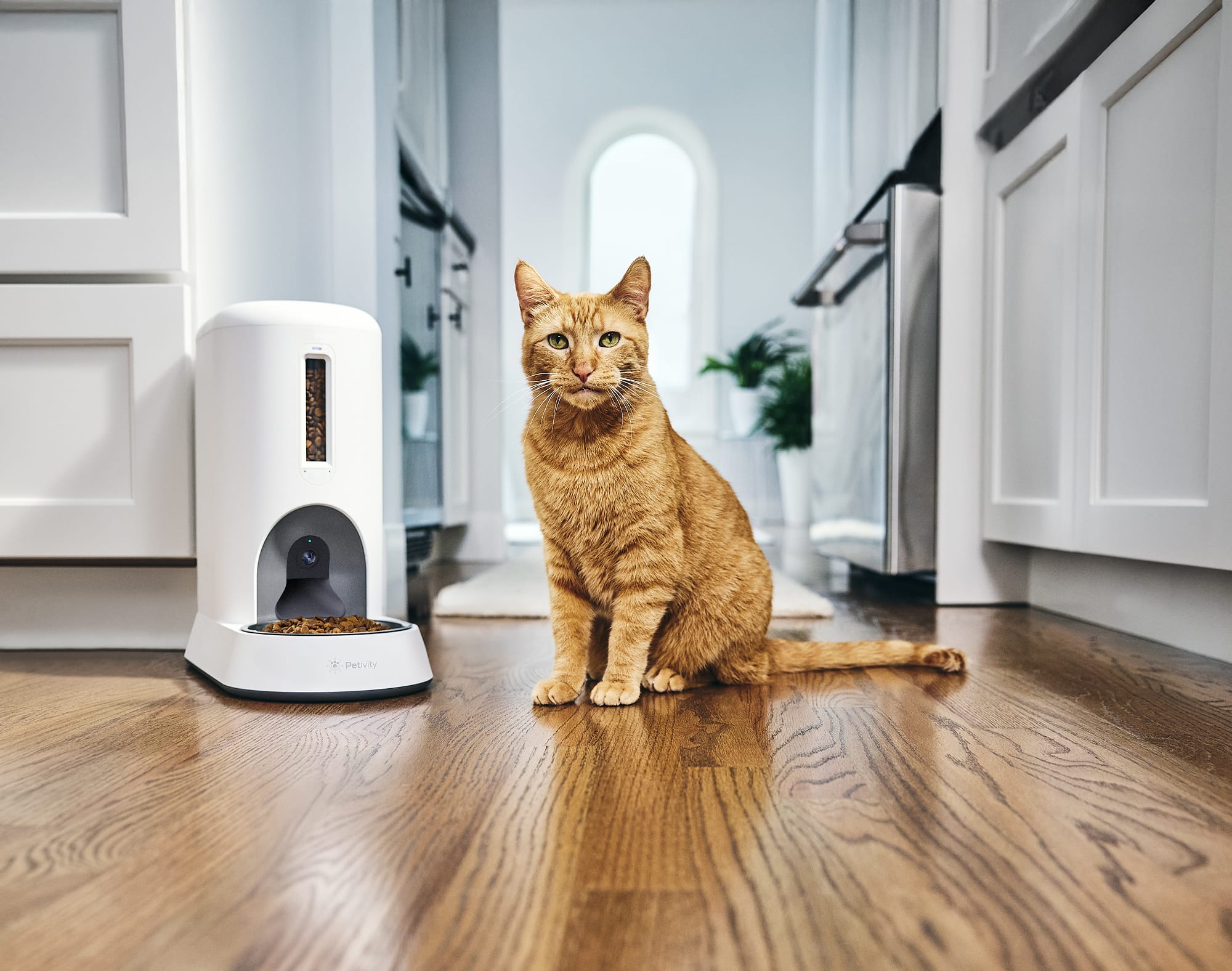
Purina has spent more than a century thinking about pet nutrition. But in recent years, the company has been expanding that expertise into a new domain: connected devices that help pet owners understand their pets' health in real time.
As part of a larger Petivity ecosystem, inclusive of dogs and cats, devices and kits, their IoT products for cats began with a smart litter box monitor, and now they’re preparing to launch their second major cat IoT product — a smart cat feeder designed for multi-cat households, that allows pet owners to monitor an important health aspect of their cats.
On a recent webinar, Dr. Natalie Langenfeld‑McCoy, Lead Data Scientist and Manager at Purina, walked through the journey of building the feeder, the challenges of real‑world edge AI, and how Edge Impulse helped her team bring the product to life.
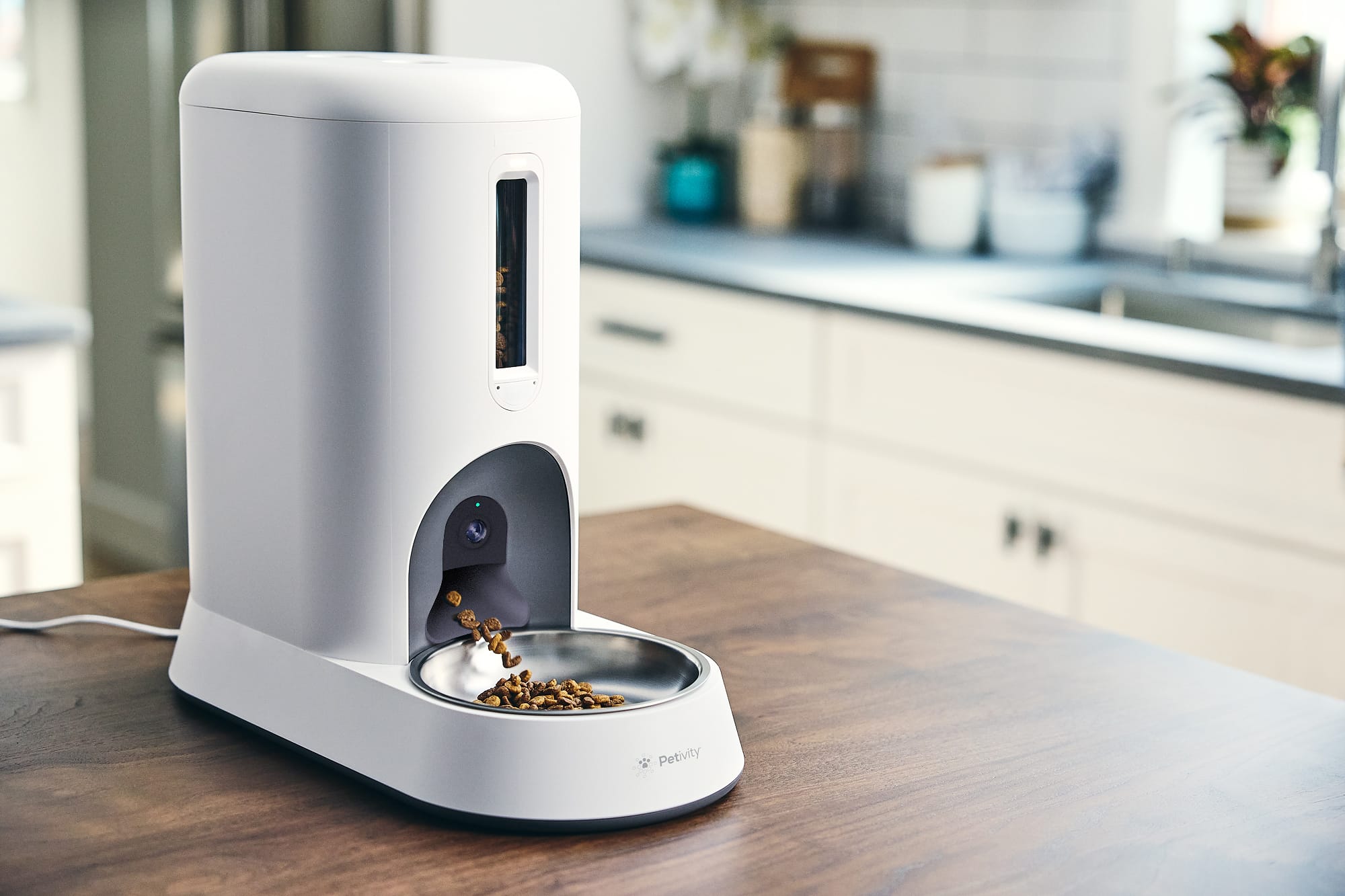
A Feeder Designed for Multi‑Cat Homes
Pet health is often a concern for households with cats and dogs, including managing a pet's weight and reducing risk of becoming overweight. The new Purina smart cat feeder focuses on that by tracking a simple but surprisingly difficult problem: in a home with multiple cats, who is eating what, and how much?
Purina leverages two data sources to give pet owners these insights. “We're collecting load cell data that's underneath the bowl, and we're collecting image data from an onboard camera,” Langenfeld‑McCoy explained. “We combined these two signals with a combination of edge AI, as well as cloud machine learning models, so that we can accurately assign meals to individual cats and track behavior over time.”
The feeder doesn’t just automate dispensing. It tracks how long each cat eats, how fast, and how much. Those insights flow into the Petivity app, giving owners a clearer picture of their cats’ daily habits.
Why Edge AI Was Non‑Negotiable
Once Purina added a camera, they needed intelligence on the device itself, not just in the cloud.
“Once we had a camera on board and were trying to use it to make intelligent decisions, we knew we needed on-device edge models.” Langenfeld‑McCoy said. The feeder has to detect when a cat approaches, decide which images are worth sending to the cloud, and filter out everything else. That means low‑latency, privacy‑preserving inference directly on the device.
This is where Edge Impulse became a critical partner. Purina’s data science team had deep experience in modeling, but not in the constraints of embedded AI, such as memory limits, quantization, latency budgets, and power consumption.
Langenfeld‑McCoy says “We've really learned a lot through this collaboration with Edge Impulse.”
Building the Dataset: From Clean Labs to Real Homes
The feeder’s intelligence depends on two very different types of data: images and load‑cell readings. Each required its own strategy.
Stage 1: Proving the concept with open‑source images
“For our image recognition models, we were able to go to open source images first just to prove out the core idea. Could we detect the cat? Could we distinguish the cats at all?”
Stage 2: Controlled prototype data
Load‑cell data, on the other hand, doesn’t exist publicly. Purina had to build their own early hardware.
“We had to start building out a very early physical prototype, basically a load cell under a bowl with an on-device camera, to start collecting real data in a very controlled environment. Single cats eating, cleaning bowls between sessions, very clean data.”
That early dataset was meticulously labeled.
“We painstakingly labeled all of that data, to the millisecond by a team of labelers that became the foundation for our first behavior models. You really need that ground truth data to make good models.”
Stage 3: Real‑world chaos
Once prototypes went into homes, everything changed.
“Things get a lot messier when you get into homes, you get cats eating together, you get cats eating back to back. You get fronts of faces, tops of heads. Crumbs from food impacting load cell data.”
“We were able to make continuous updates to both the data set and the models that we use, that we trained from those data sets, as well as changes to the hardware design to make sure that when we go into the real world environment, we're going to provide the best overall experience for our pet parents and our cats.”
Hardware and AI Must Be Designed Together
In developing their new feeder, it became clear how tightly the hardware and AI are intertwined.
“Something that looks minor, changing the bowl shape or putting the sensor in a slightly different place, can completely change how the model behaves.”
Every new prototype required re‑validation. Sometimes even retraining.
“You can't say, ‘I'm going to make the hardware now and add AI later.’ They really need to be co-developed, tested together, and iterated together so that you're getting a product that works in the end.”
This mindset — hardware, firmware, and AI as a single integrated system — is exactly the approach Edge Impulse encourages in edge AI product teams.
Iterating Toward Launch
Before launch, Purina iterates aggressively.
“We're constantly iterating, we're adding more data. We're trying to get the models as stable and generalizable as possible before we launch those V1 production models..”
But once the product is in customers’ homes, the philosophy shifts.
“We never really just update for the sake of updating. We want to make sure we're updating things that will make meaningful improvements for trust in the product.”
User feedback, misclassifications, and friction points guide the roadmap.
A Broader Vision: Proactive Pet Health
Purina isn’t building gadgets for the sake of gadgets. The feeder and litter box monitor are part of a larger strategy to help cat owners detect changes earlier and make better decisions about nutrition and care.
Petivity “helps pet owners understand their individual pet's daily behaviors, detect changes earlier so they can be more proactive about health and well-being,” Langenfeld‑McCoy said. It also “extends Purina's long standing expertise that we have in nutrition and science to the digital space”
Their initial product, the smart litter box monitor, allows pet owners to track their cat’s weight, urination, and defecation events each time they use their litter box; the Petivity app then provides details about the cat’s behaviors and sends alerts about key changes that may require a veterinary consultation.
Now with the feeder, they're tracking the food intake aspect of a pet's well-being too.
Ultimately, the goal is personalized nutrition and lifelong health insights that inform proactive care, something Purina is uniquely positioned to deliver.
Advice for Teams Building Their First Edge AI Product
Langenfeld‑McCoy suggests three lessons learned:
- Be intentional about what runs on the edge. “Not everything needs to live on the edge. Edge AI works best when there's a clear benefit.”
- Choose the right partners. “We've really learned a lot through this collaboration with Edge Impulse.”
- Treat the entire system as one product. “Your hardware, your firmware, your AI, whether it's on the edge or in the cloud, and the overall user experience is one big integrated system that has to work seamlessly together.”
Conclusion
Purina’s smart feeder is a strong example of what happens when a brand embraces edge AI not as a bolt‑on feature, but as a core part of product design. In partnership with Edge Impulse, Purina’s team was able to move from early prototypes to production‑ready models, navigate the messy realities of real‑world data, and build a device that gives pet owners meaningful insights, not just automation.
It’s a glimpse of a future where pet care is proactive, personalized, and powered by intelligent devices that quietly work in the background to keep pets healthier and happier.