
The Edge Impulse Virtual Hackathon 2025 is in the books. Over the course of the competition, from 30th October to 30th of November, we witnessed the community working and delivering projects showing innovation and creativity to solve real-world problems with edge AI.
More than 1,000 developers worldwide worked to submit machine learning models and edge AI applications. With 156 submissions (30% in model development, 70% in edge AI applications) the submissions showcased solutions addressing real-world challenges, from environmental monitoring to educational tools, all powered by Edge Impulse.
The contest judges faced the extremely difficult task of evaluating hundreds of interesting projects. Today, we are happy to celebrate the five projects that have been selected showcasing technical excellence, real-world impact, great documentation, and advanced model development.
You can watch the winners announcement session here.
Here are our five selections:
Best Overall Project: Ocean Water Quality Classification for Bacteria Contamination Using TinyML and Sensor Fusion
The project "Ocean Water Quality Classification for Bacteria Contamination Using TinyML and Sensor Fusion" by Luis Burgos. This Edge AI project addresses delays in beach water testing by providing real-time classification of ocean water as `safe` or `unsafe` for swimming, detecting enterococci bacteria levels via sensor fusion on an ESP32-S3 microcontroller using Edge Impulse.
Luis analyzed the data from turbidity, pH, TDS, water temperature, and ambient temperature sensors. The Edge Impulse model — trained on 36 lab-validated samples from Revere Beach, Massachusetts — achieved 99.4% accuracy with raw data input and deploys inferences in just 2 ms. Results are transmitted via LoRa to Luis’ Home Assistant dashboard with voice alerts, proving scalable, low-power monitoring for public health.
Check out the GitHub repo, demo video, and Edge Impulse project.

Best Edge AI Application: TotTalk Box: Language learning for Toddlers
The "TotTalk Box: Language Learning for Toddlers" project was developed for delayed speech scenarios in toddlers, emphasizing fun, natural learning without internet or screens. It is based on an offline device that aids toddlers in speech development by recognizing real-world objects and providing interactive pronunciation coaching on a Rubik Pi 3 with Edge Impulse.
Based on the Edge Impulse YOLO Pro object detection model, they trained the model on 256 labeled images across 20 classes such as toys and household items. The system identifies items via webcam, speaks the word, listens for repetition with Whisper integration, and offers positive feedback — all running locally with int8 quantization with minimal latency.
Explore the GitHub repo, demo video, and Edge Impulse project.

Best Model Development: Dendritic NN Impulse Block
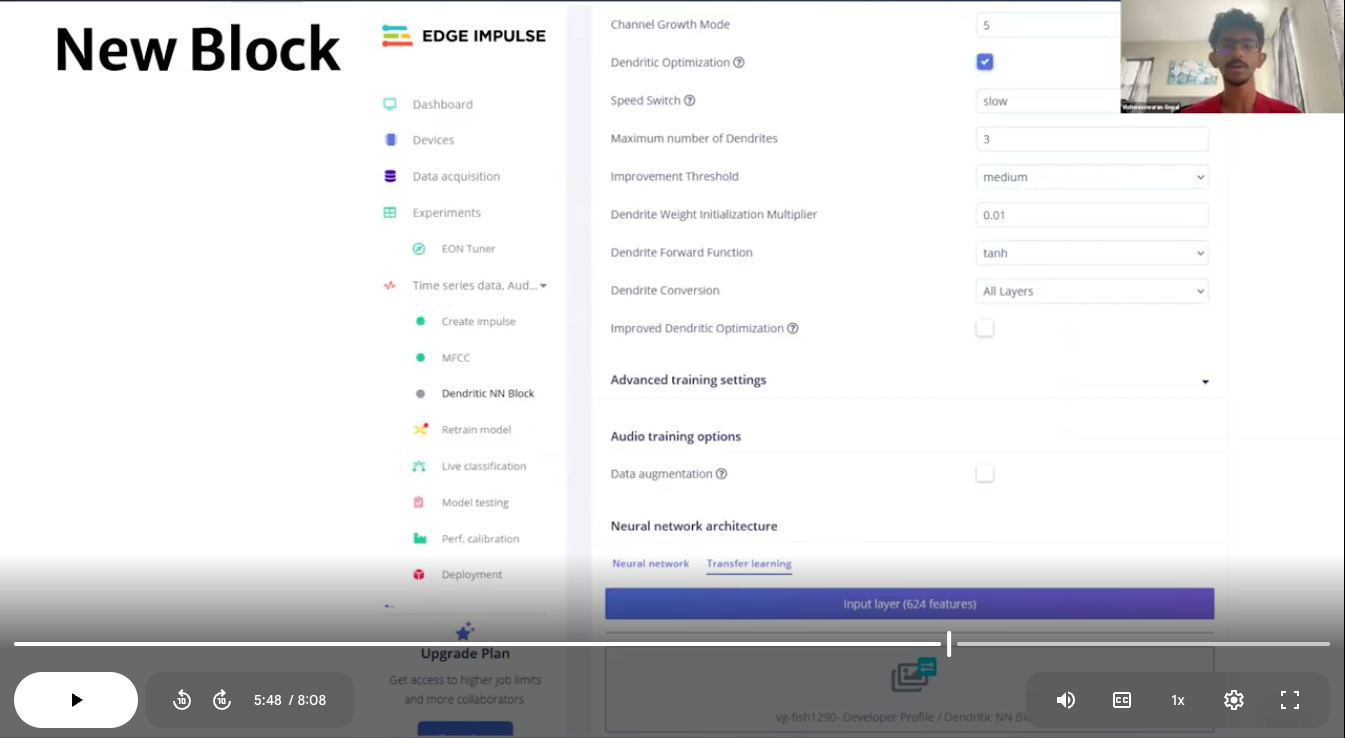
The Best Model Development award goes to the "Dendritic NN Impulse Block" project. This project introduces a custom PyTorch-based ML block for Edge Impulse, exemplified through a keyword-spotting model detecting "Hello World" in audio.
Built on the Edge Impulse keyword spotting tutorial framework, it uses MFCC features for voice data. The dendritic optimization offers the ability to compress models by up to 90% without loss in accuracy. This creates a great potential for custom blocks in Edge Impulse for future Edge AI projects in embedded devices.
View the GitHub repo, demo video, and Edge Impulse project.
Impact Award: AI for good: Sane.AI
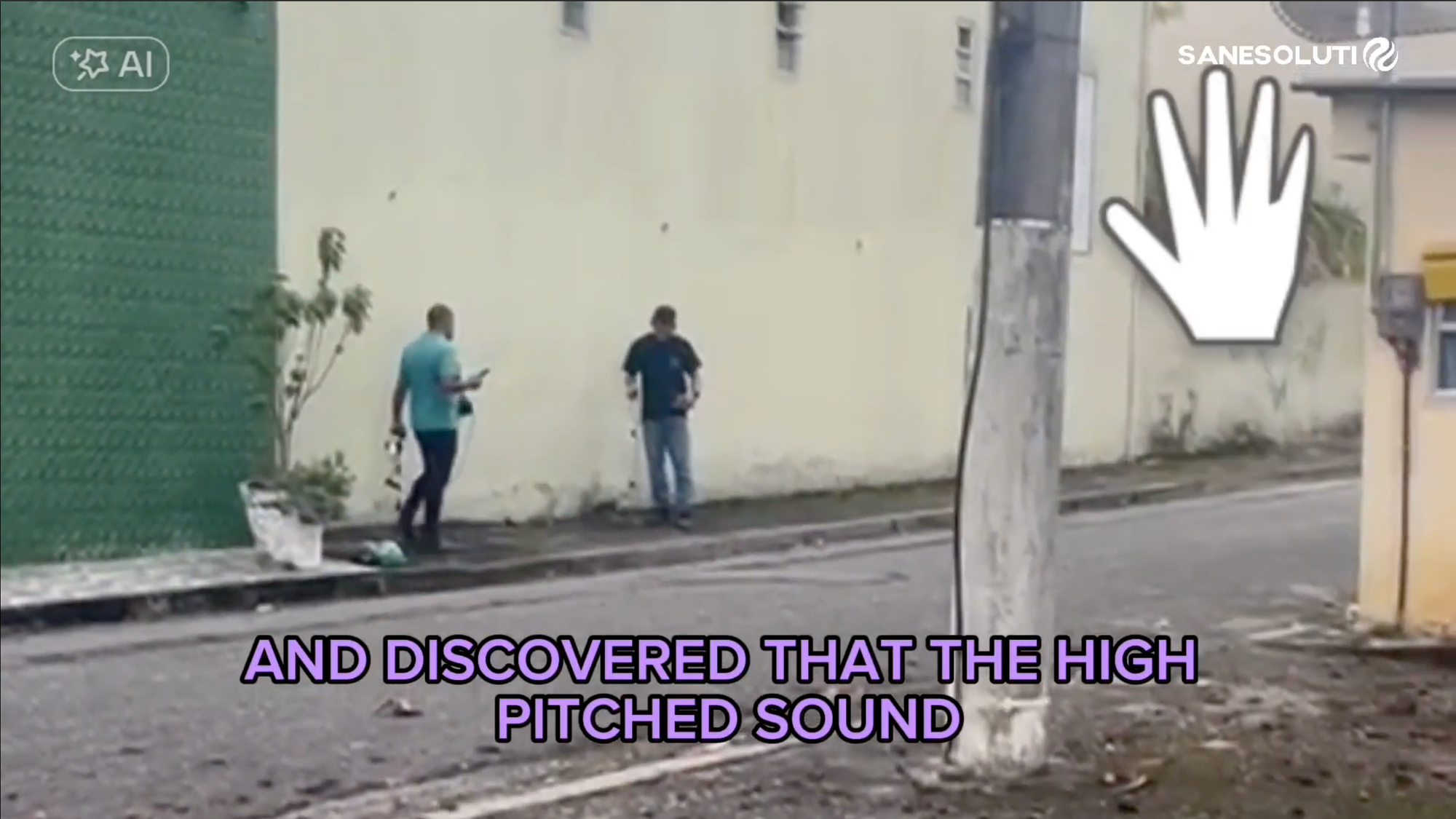
This edge AI solution detects underground water leaks in urban settings using geophone sensors and a 1D-CNN model on a Samsung Galaxy Tab A9+ via an Android application.
The goal of the project is to combat water loss (up to 60% from leaks in systems like Brazil's cities). Trained on 1,015 samples from real expeditions and the UrbanSound8K public model, the hybrid model analyzes Mel-Filterbank Energy and spectral features for 87.7% accuracy, sending GPS-tagged alerts via an Android app. The project reduces false positives through temporal filtering, promoting future sustainable water management.
See the GitHub repo, demo video folder, and Edge Impulse project.
Student Award: Albaricoque
The Student Award selection is "Albaricoque" by Sergio Mesa from the Universidad Javeriana from Bogotá (Colombia).
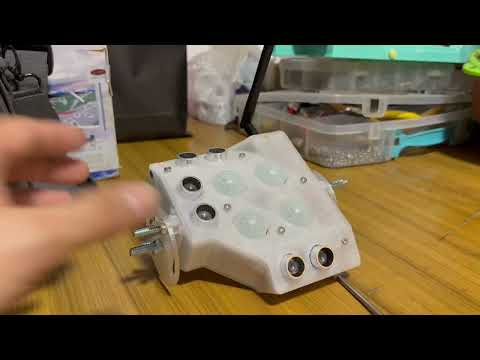
This is a camera-free perimeter node for gates and fences which detects humans within a max 3 meters distance using an Arduino Nano 33 BLE Sense Rev2 with four PIR and three ultrasonic sensors. Fusing sensor data for privacy-preserving detection, the Edge Impulse model — trained on 338 samples labeled for various movements — delivers 86.1% validation accuracy in int8 quantization.
Using a 3D-printed enclosure for deployment. It's a low-power, innovative security solution.
Discover the GitHub repo, demo video, and Edge Impulse project.
Wrap Up
The Edge Impulse team wants to congratulate all the participants! The Edge Impulse Virtual Hackathon 2025 has showcased our belief that the global developer community is ready to innovate with Edge AI and solve real-world challenges. Thanks to all the participants for your time and creativity. We encourage everyone to check out these 2025 projects and continue to work on your own Edge AI solutions.
See you in the Edge Impulse Discord and we look forward to seeing your future Edge AI creations!